Drive-Thru Solution Guide 2026: Faster Lanes, Happier Customers
The drive-thru lane has become the front door of modern quick-service business. A well-built drive-thru solution shaves seconds off every order, lifts throughput at peak hours, and turns a stressful rush into a smooth, profitable routine. In 2026, with customers expecting speed and accuracy, upgrading the lane is one of the highest-return moves an operator can make.
This guide walks through the components of a modern lane, the metrics that matter, and how businesses in Pakistan and Saudi Arabia are winning with connected technology.
What a Modern Drive-Thru Solution Includes
Today’s lane is a coordinated system, not a single gadget. Each part feeds the next to keep orders accurate and cars moving. A complete Drive Thru Solution in pakistan typically bundles the following into one managed package.
- Digital menu boards: bright, weatherproof screens that update by daypart.
- Order confirmation displays: show the order so customers catch errors early.
- Wireless headsets: clear audio between staff and the lane.
- Vehicle detection sensors: start timers and trigger greetings.
- Timer and analytics software: measure every stage of service.
Why Speed of Service Drives Profit
Throughput is money. The National Restaurant Association consistently finds that off-premises channels, led by the drive-thru, now account for a major share of quick-service revenue. Shaving even ten seconds per car can add thousands of served customers over a year.
Accuracy matters just as much. A remade order costs food, time, and goodwill. Order confirmation screens and clear headsets cut mistakes before the car reaches the window.
How Do You Measure Drive-Thru Performance?
You cannot improve what you do not measure. Modern lanes capture precise data at every step, turning guesswork into targeted fixes. Track these core metrics:
- Total lane time: arrival to departure, the headline number.
- Menu-board time: how long ordering takes.
- Pull-forward rate: how often cars wait in a holding spot.
- Drive-off rate: customers who leave before ordering.
A good analytics dashboard flags the slowest stage automatically, so managers know exactly where to add staff or adjust layout.
Single vs Dual Lane: Which Fits You?
Lane configuration shapes capacity. The table compares the two common layouts so you can match design to traffic.
| Factor | Single Lane | Dual Lane |
|---|---|---|
| Best for | Moderate traffic | High-volume sites |
| Throughput | Good | Excellent |
| Setup cost | Lower | Higher |
| Staff needs | Standard | More per shift |
Dual lanes merge before the window and can nearly double peak capacity, but they demand more space and staff. Many operators start single and expand as demand proves out.
Drive-Thru Across Borders: Pakistan and Saudi Arabia
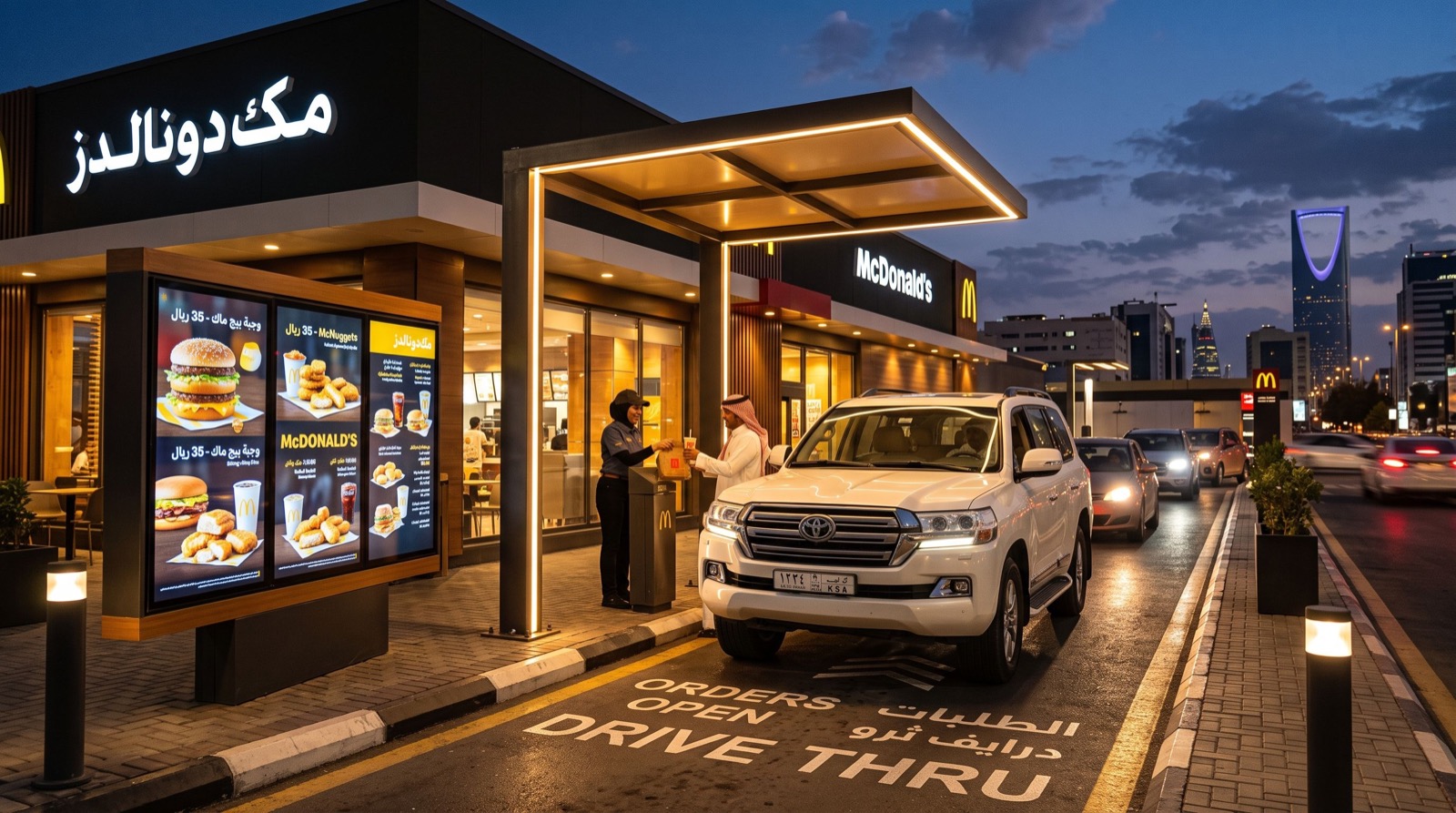
Appetite for fast, contactless service is surging across the region. Brands expanding in both markets want consistent technology that works the same in Lahore and Riyadh. A proven Drive-Thru Solution in Saudi Arabia brings the same analytics, bilingual menu boards, and reliable hardware that teams already trust elsewhere.
Standardizing the platform across countries simplifies training, support, and reporting. New sites launch faster because they inherit settings proven at existing locations.
Regional Must-Haves
- Bilingual boards: Arabic, Urdu, and English support.
- Heat-rated displays: screens built for high outdoor temperatures.
- Local support: fast on-site service to limit downtime.
Choosing the Right Partner
Technology alone will not fix a slow lane; implementation decides the outcome. Work with trusted professionals who handle site survey, installation, staff training, and maintenance under one agreement.
Ask for references from similar venues and a live demo using your real peak numbers. A credible vendor will show how the system holds up during a lunch rush, not just in a quiet showroom.
Vendor Checklist
- Proven installs in your region and segment.
- End-to-end service from design to support.
- Open integration with your POS and kitchen displays.
- Clear uptime guarantees and response times.
- Scalable rollout plans for multiple sites.
Practical Tips to Speed Up Any Lane
From real-world rollouts, a few low-cost habits deliver outsized gains:
- Bump the slow stage: use timer data to target one bottleneck at a time.
- Pre-sell at the board: smart menu prompts raise average ticket size.
- Stage popular items: prep high-volume products ahead of the rush.
- Review weekly: small, steady tweaks beat rare big overhauls.
Common Drive-Thru Mistakes to Avoid
Even a well-funded lane can underperform when basic errors creep in. Across real deployments, the same issues surface repeatedly. Avoid them and your throughput climbs.
- Cluttered menu boards: too many items overwhelm drivers and stretch ordering time, the most controllable stage of the lane.
- No order confirmation: skipping the confirmation screen invites mistakes that trigger costly remakes at the window.
- Ignoring timer data: a dashboard that nobody reviews is wasted spend; the insight only pays off when managers act on it.
- Understaffing the peak: saving on one shift during the lunch rush can cost dozens of lost cars per day.
The Future of the Drive-Thru in 2026
Lane technology is advancing quickly, and forward-looking operators are already adopting the next wave. Three trends stand out this year.
- AI voice ordering: automated order-taking frees staff for food prep and keeps the board moving during peaks.
- Predictive prep: systems forecast demand and prompt kitchens to stage popular items before the rush hits.
- License-plate recognition: loyalty members get personalized greetings and faster, remembered orders.
Building these capabilities into your platform choice now protects the investment and keeps each location competitive as customer expectations climb.
Frequently Asked Questions
How much does a drive-thru solution cost?
Cost depends on lane count, screen size, and software tier. A single-lane upgrade is far cheaper than a dual-lane build. Most vendors offer phased packages so you invest as traffic and revenue grow.
How long does installation take?
A standard single-lane setup often goes live within a few days once hardware arrives. Larger or multi-site projects phase in location by location to avoid disrupting daily service.
Can it integrate with my existing POS?
Yes. Modern drive-thru platforms connect to common POS and kitchen display systems, so orders, timers, and payments flow together without manual re-entry.
Does a drive-thru solution work in hot climates?
It does. Hardware rated for high temperatures and bright sunlight is standard for Pakistan and Saudi Arabia, ensuring screens stay readable and reliable year-round.
Final Thoughts
A thoughtful drive-thru solution pays for itself through faster service, fewer errors, and higher throughput. In 2026, with the lane driving a growing share of quick-service sales, the operators who measure, tune, and standardize their technology will pull ahead. Start with clear metrics, choose a partner who delivers end to end, and let the data keep your lane moving.